

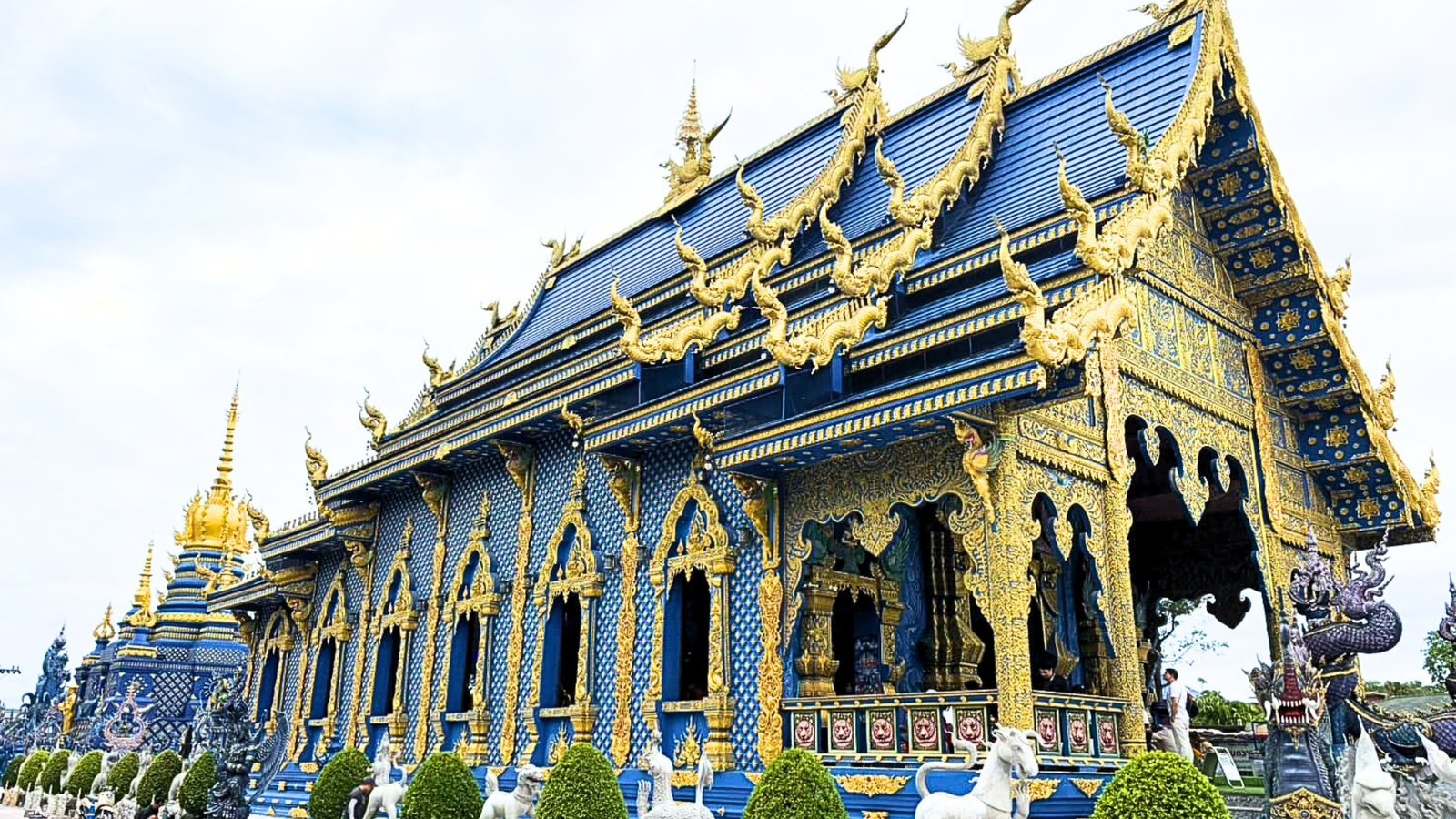

Just a short drive from the dazzling white of Wat Rong Khun (the White Temple), a completely different kind of magic is waiting. Here, the world is washed in deep, mesmerizing shades of sapphire, cobalt, and ultramarine. This is Wat Rong Suea Ten, better known as the Blue Temple. And while that unforgettable color is what first draws everyone in, to dismiss it as just a blue temple is to miss the profound and powerful artistry poured into every single corner.
Where the White Temple feels like a celestial dream, the Blue Temple is a journey into a mythical, divine realm. It’s a place where the lines between a traditional Buddhist temple and a world-class art gallery beautifully blur. Ready to step inside this blue-hued wonder? Let’s explore.
The Artist: Continuing a Local Legacy
The Blue Temple’s story is deeply connected to the White Temple, but with its own unique twist. The visionary here is Putha Kabkaew, a protégé and close colleague of Chalermchai Kositpipat (the creator of the White Temple).
Kabkaew worked alongside the master for years, and that influence is clear in the Blue Temple’s bold, contemporary style. However, he wasn’t content to simply imitate. He chose a powerful and less common color in Buddhist art—blue—to tell his own stories from Buddhist scripture and Thai folklore. He built upon the grounds of an abandoned old temple, breathing new life into it with a vision that is both respectful of tradition and fiercely modern.
A Walk Through the Blue Realm: Myth and Majesty
From the moment you arrive, the experience is immersive. The temple complex isn’t as sprawling as the White Temple, but every detail is intentional and awe-inspiring.
1. The Giants at the Gate
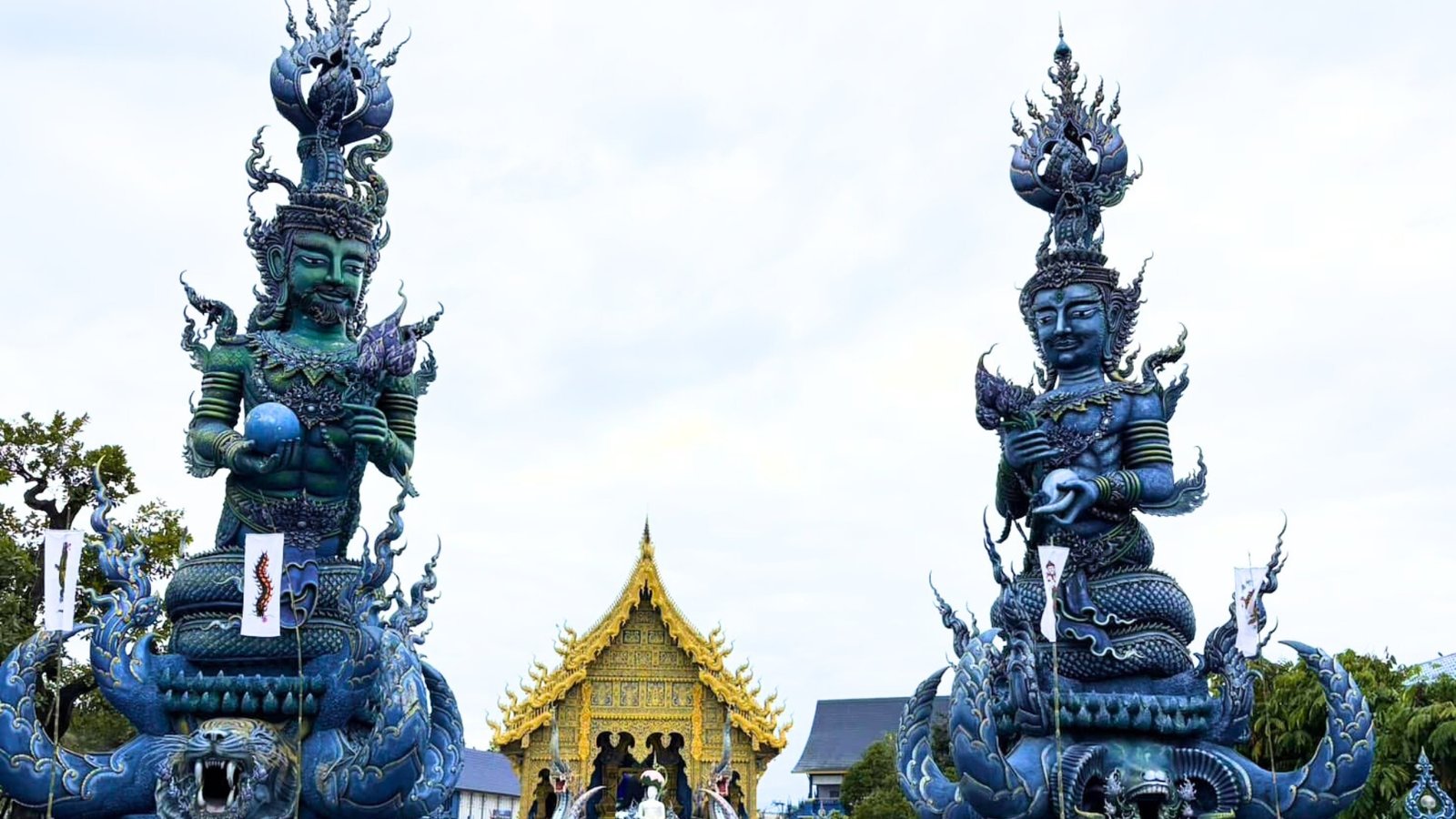
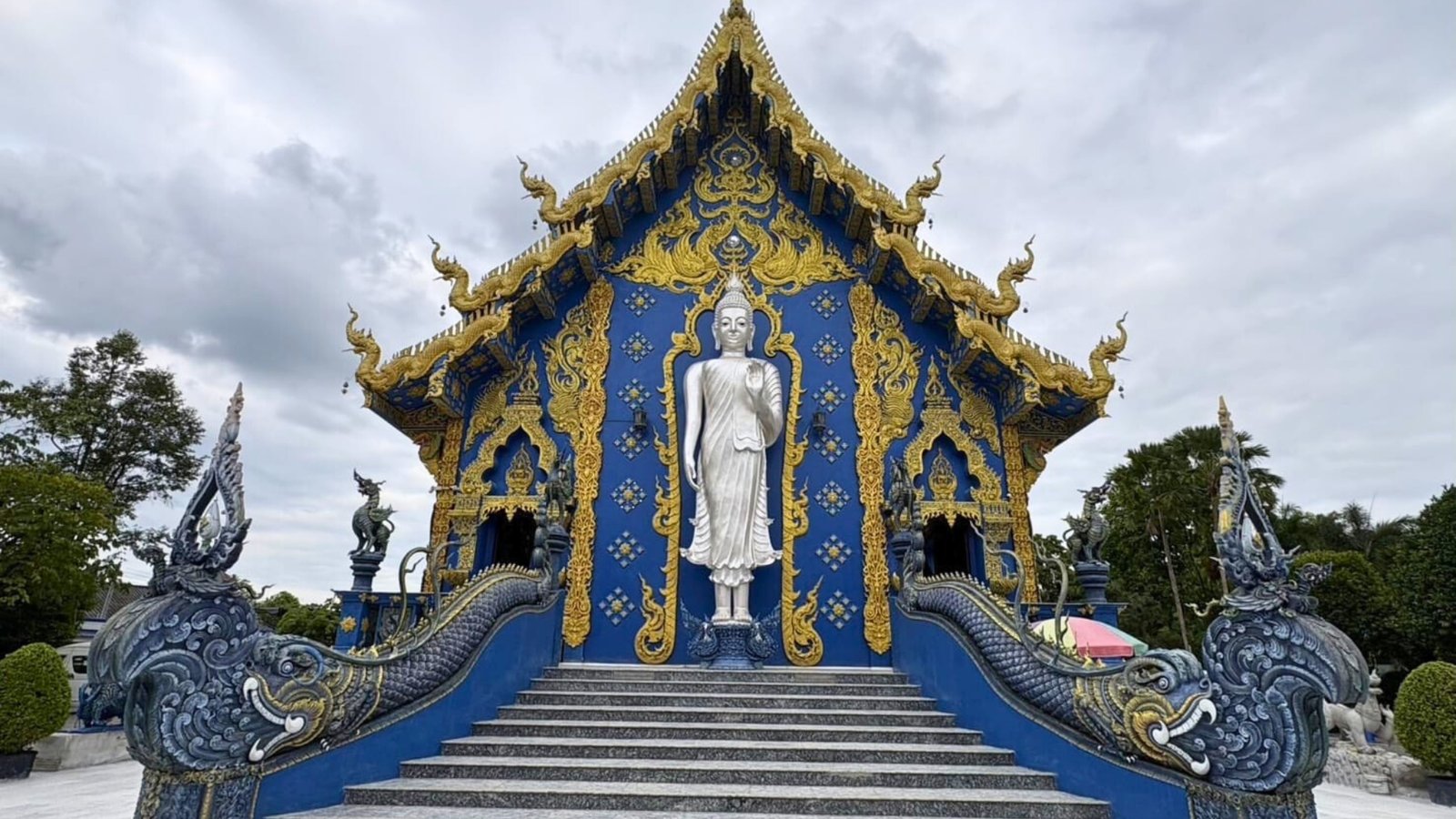
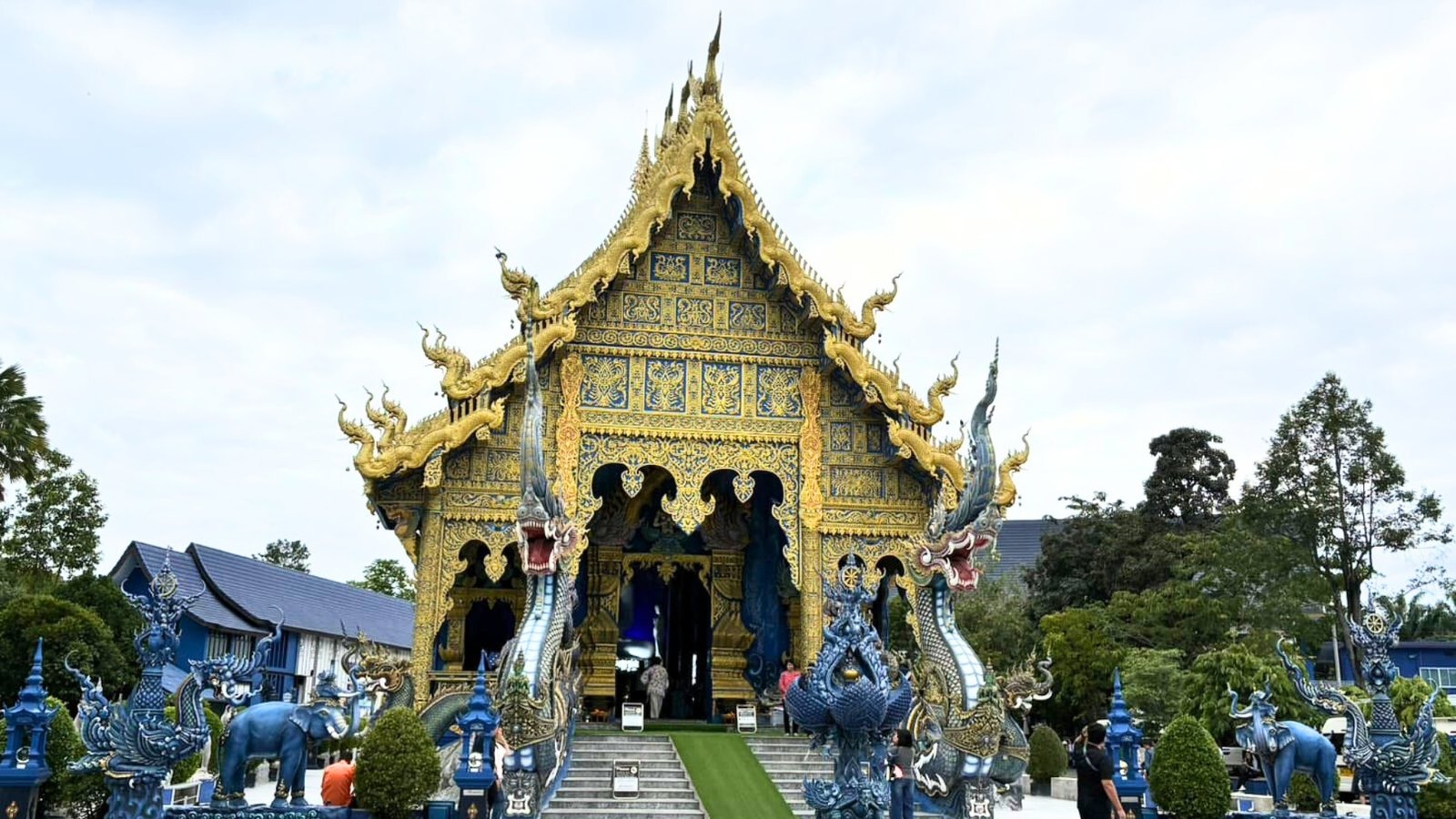
Your welcome committee is anything but subtle. Flanking the entrance to the main hall (viharn) are two enormous, stunningly detailed Naga statues. These mythical serpent-beings, with their scales painted in shimmering blue and gold, aren’t just decoration. In Buddhist lore, the Naga is a protector of sacred knowledge and waterways. They set the tone immediately: you are entering a powerful, protected space.
2. The Main Hall: A Sapphire Sanctuary
Step through the doors and prepare to have your breath taken away. The interior is a symphony in blue. The towering central Buddha statue, Phra Buddha Sidha Mongkhon Surinthara, is not the typical gold or stone. He is a brilliant, serene white, which makes him radiate against the deep blue background that covers every wall and ceiling.
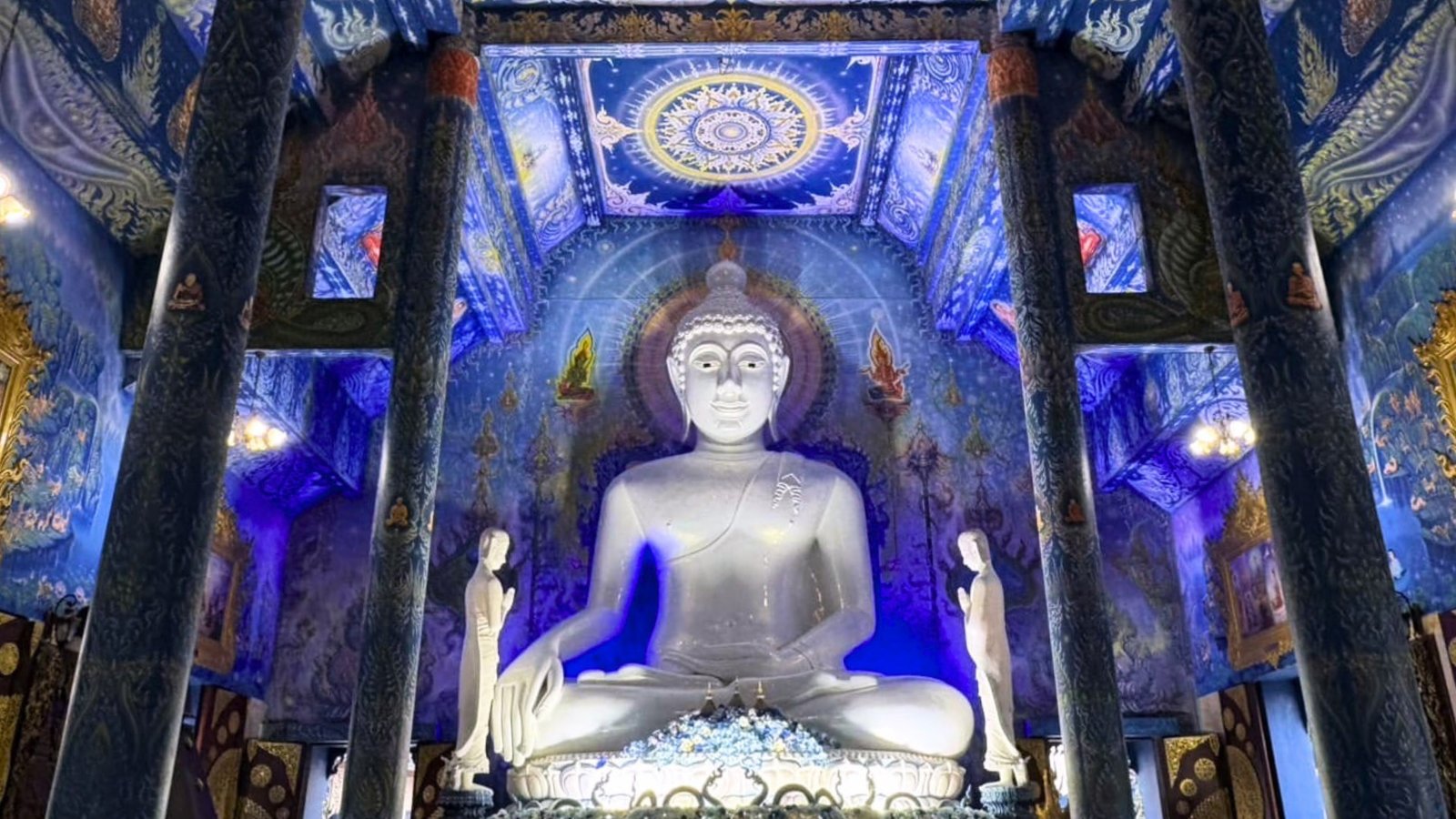
This specific Buddha posture, with one hand touching the ground, represents the moment of the Buddha’s enlightenment, calling the earth to witness his triumph over illusion. The contrast is deliberate and breathtaking—the pure, enlightened mind shining against the deep, infinite blue of the cosmos.
3. The Murals: A Modern Mythology
Look closer at the walls, and the blue canvas comes alive. Kabkaew’s murals are a masterclass in modern Thai art. They depict scenes from the Buddhist canon, but with a dynamic, almost animated style. Deities, demons, and celestial beings swirl across the walls in a vibrant dance.
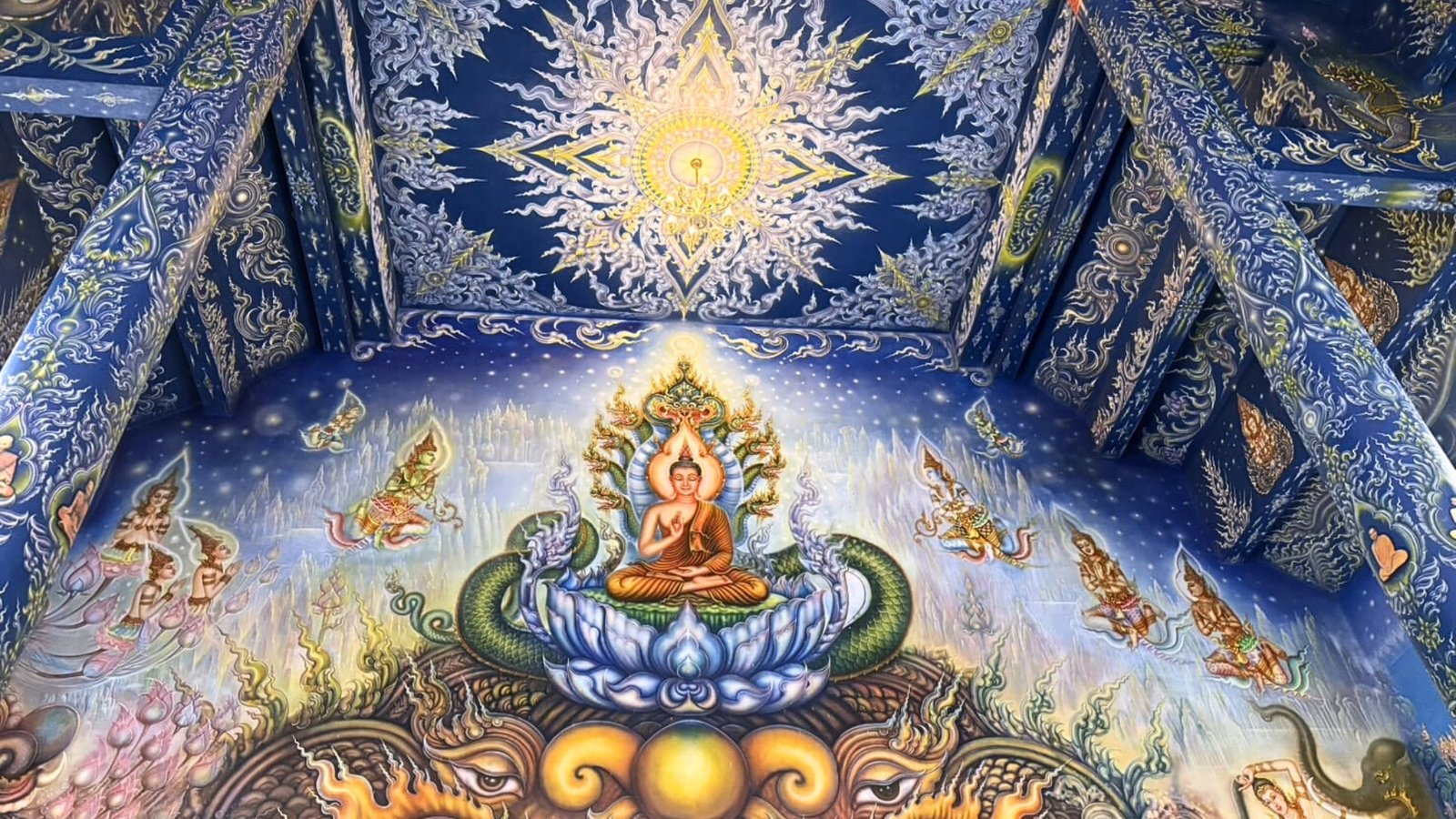
Unlike the pop-culture commentary of the White Temple, the Blue Temple’s art feels more timeless. It’s as if ancient stories have been retold with a contemporary energy, making them feel immediate and powerful. The intricate gold leaf used to outline the figures makes them pop against the blue, creating a sense of depth and movement.
4. The Outer Sanctum: More Than the Main Hall
Don’t just see the main hall and leave. The ordination hall (ubosot) behind it is also open and features a magnificent Buddha image under the protection of a seven-headed Naga. The exterior of all the buildings continues the brilliant blue and gold color scheme, making the entire complex incredibly photogenic, especially under the clear Chiang Rai sky.
Your Essential TravelGoSavvy Guide
Best Time to Visit:
Like the White Temple, arriving at opening (7:00 AM) is your best bet for soft light and fewer crowds. Late afternoon, around 4:00 PM, is also magical as the setting sun illuminates the temple, and the interior begins to glow with its own light.
How to Get There:
➡️ Check Hotels & Flights for Your Trip to Chiang Mai or Chiang Rai
The Blue Temple (Wat Rong Suea Ten) is located about 15-20 minutes by car from central Chiang Rai. It’s very easy to include in a day trip.
- From Chiang Rai: The easiest way is to hire a Grab or taxi for a round trip with waiting time. It’s affordable and convenient.
- Temple Tour: The most popular option is to combine it with a visit to the White Temple (Wat Rong Khun) and the Black House (Baan Dam). You can easily hire a private songthaew or taxi for the day to take you to all three. They form the perfect “White, Blue, and Black” tour of Chiang Rai’s art temples.
What to Wear & Know:
- Dress Code: This is an active place of worship. Shoulders and knees must be covered. Sarongs are available at the entrance for a small donation if needed.
- Admission Fee: Entry is free, but donations are highly encouraged to support the temple’s ongoing maintenance and artistic development.
- Respect: Speak quietly, remove your shoes before entering the main hall, and be mindful of worshippers.
More Than a Photo Op: An Immersive Dream
The Blue Temple proves that a place doesn’t need a long, complex history to feel sacred. Its power comes from its immediate, overwhelming beauty and the clear artistic devotion poured into it. It’s a place that invites you to sit for a moment in the cool, blue-hued quiet—to simply be present and let the art wash over you.
Final Thoughts
If the White Temple is a provocative philosophical journey, the Blue Temple is a serene, visual poem. It’s a testament to how a new generation of Thai artists are reimagining spiritual spaces for the modern age, creating destinations that are both deeply reverent and utterly unforgettable.
So, when you’re in Chiang Rai, make the time for both. Let the white challenge your mind, and let the blue capture your soul.