

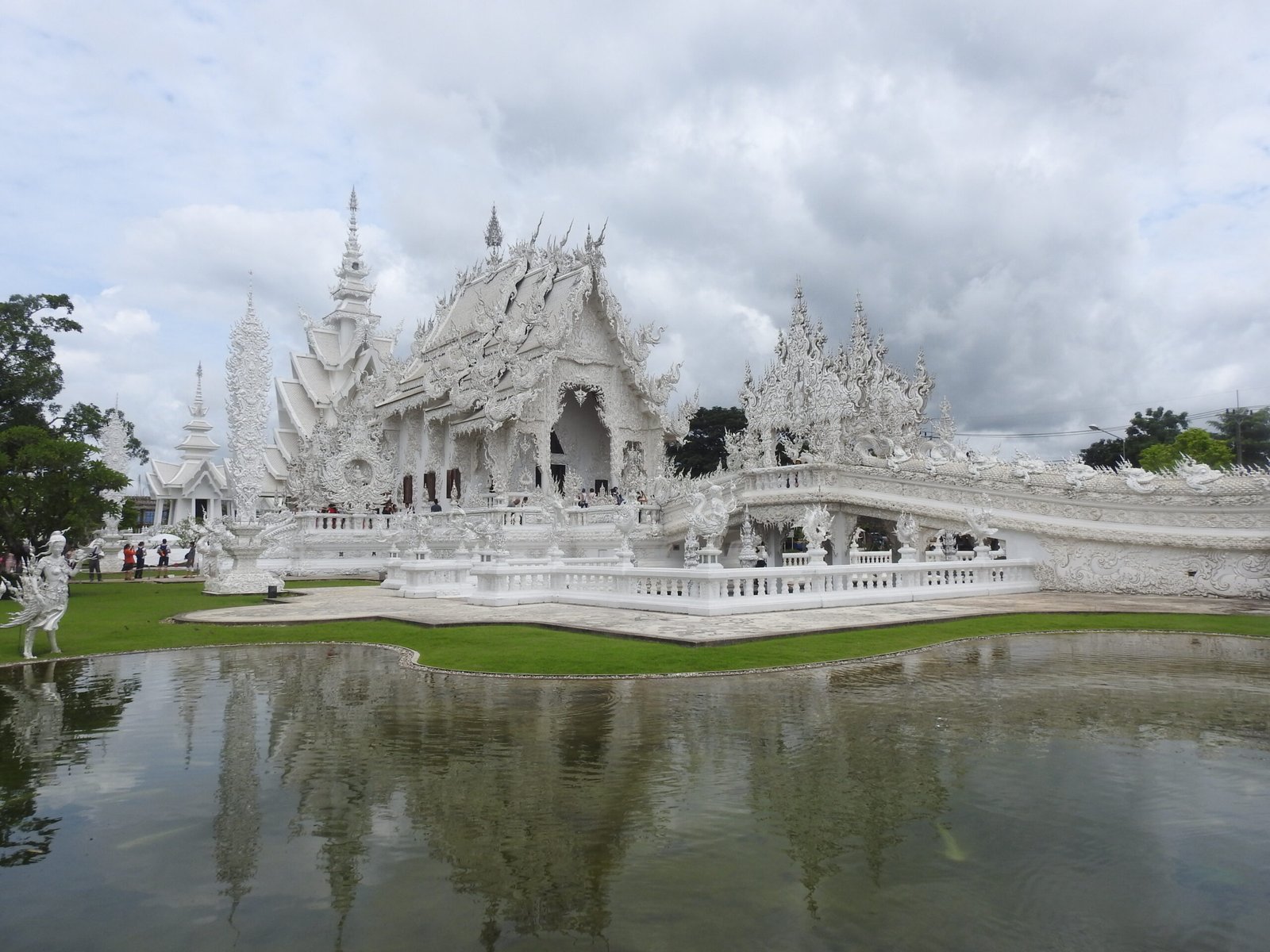

Imagine a temple that looks less like an ancient relic and more like a castle from a celestial dream. Its spires are a blinding white, its bridges are guarded by mythical beasts, and its walls shimmer with a million tiny mirrors. This is Wat Rong Khun, the White Temple of Chiang Rai, Thailand. But to call it just a temple is an understatement. It is a revolutionary piece of art, and its story is as stunning as its appearance.
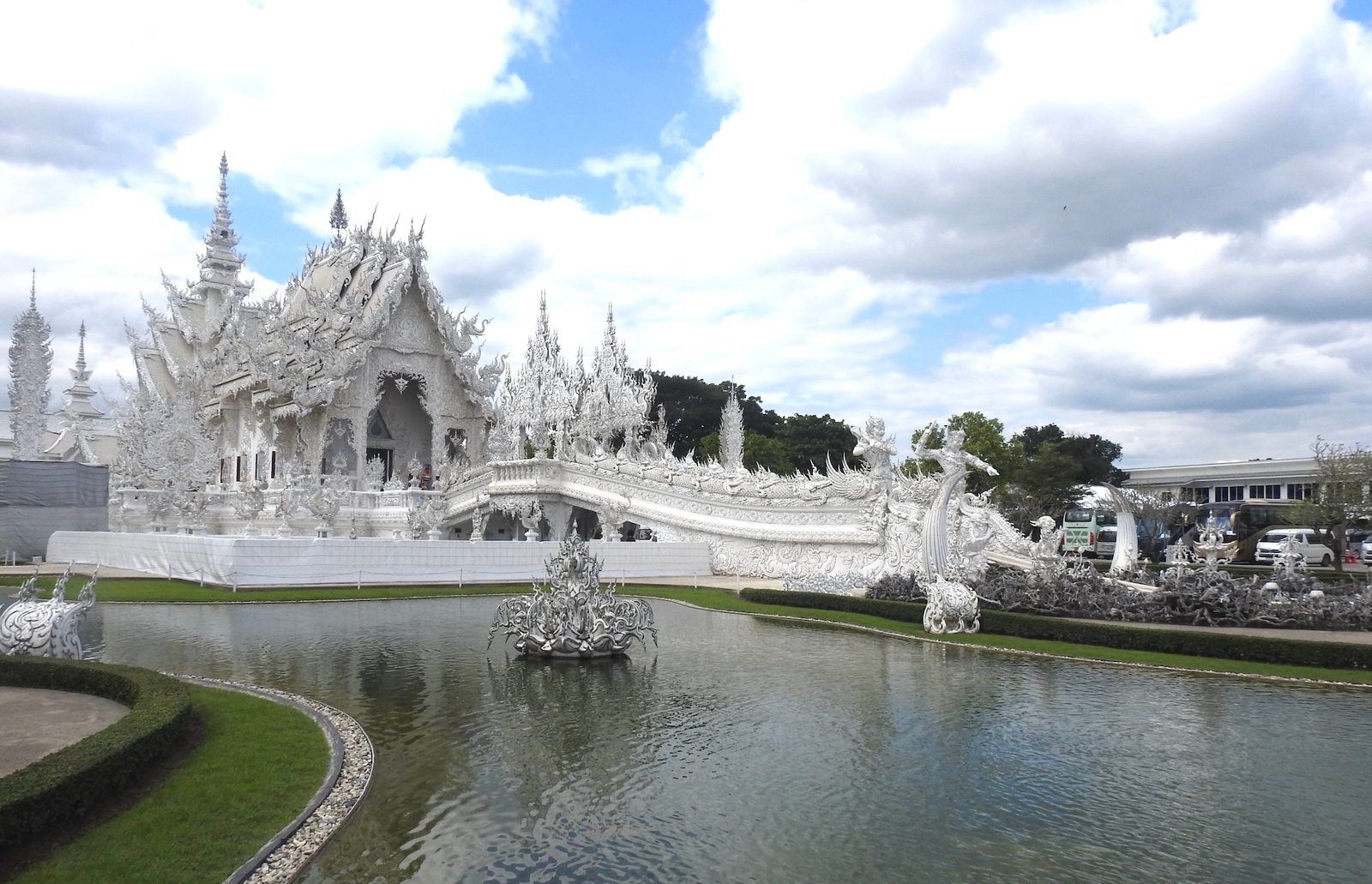
Forget quiet, golden halls. The White Temple is a vibrant, shocking, and deeply philosophical journey brought to life by one man’s epic vision. It’s a story of passion, devotion, and a daring dream that challenges everything you think you know about sacred spaces. Ready to discover the incredible story behind the beauty? Let’s dive in.
The Visionary: One Man’s Dream in White
Behind this modern marvel stands one man: Chalermchai Kositpipat. A Thai artist born in Chiang Rai, he was already famous for his traditional Buddhist paintings. But he dreamed of something bigger—a personal offering to the Buddha and a gift to the world.
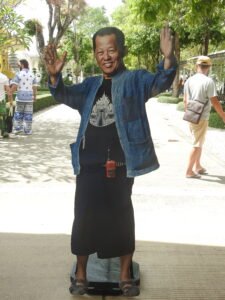
In 1997, he took on the restoration of a decaying old temple. But he didn’t just repair it; he reimagined it completely, funding the project with his own money. He famously refused large government or corporate sponsorships. Why? To ensure his radical vision remained pure and uncompromised. He calls this temple his life’s work, a project so vast it may take another 50 years to complete. He is building a legacy, not just a landmark, knowing he may not live to see it finished.
A Walk Through the Story: From Hell to Heaven
The moment you step inside, you become the main character in a story written in architecture. Every single detail is a symbol, and the stunning visuals are there to tell a profound tale.
1. The Bridge of Rebirth: Escaping Hell
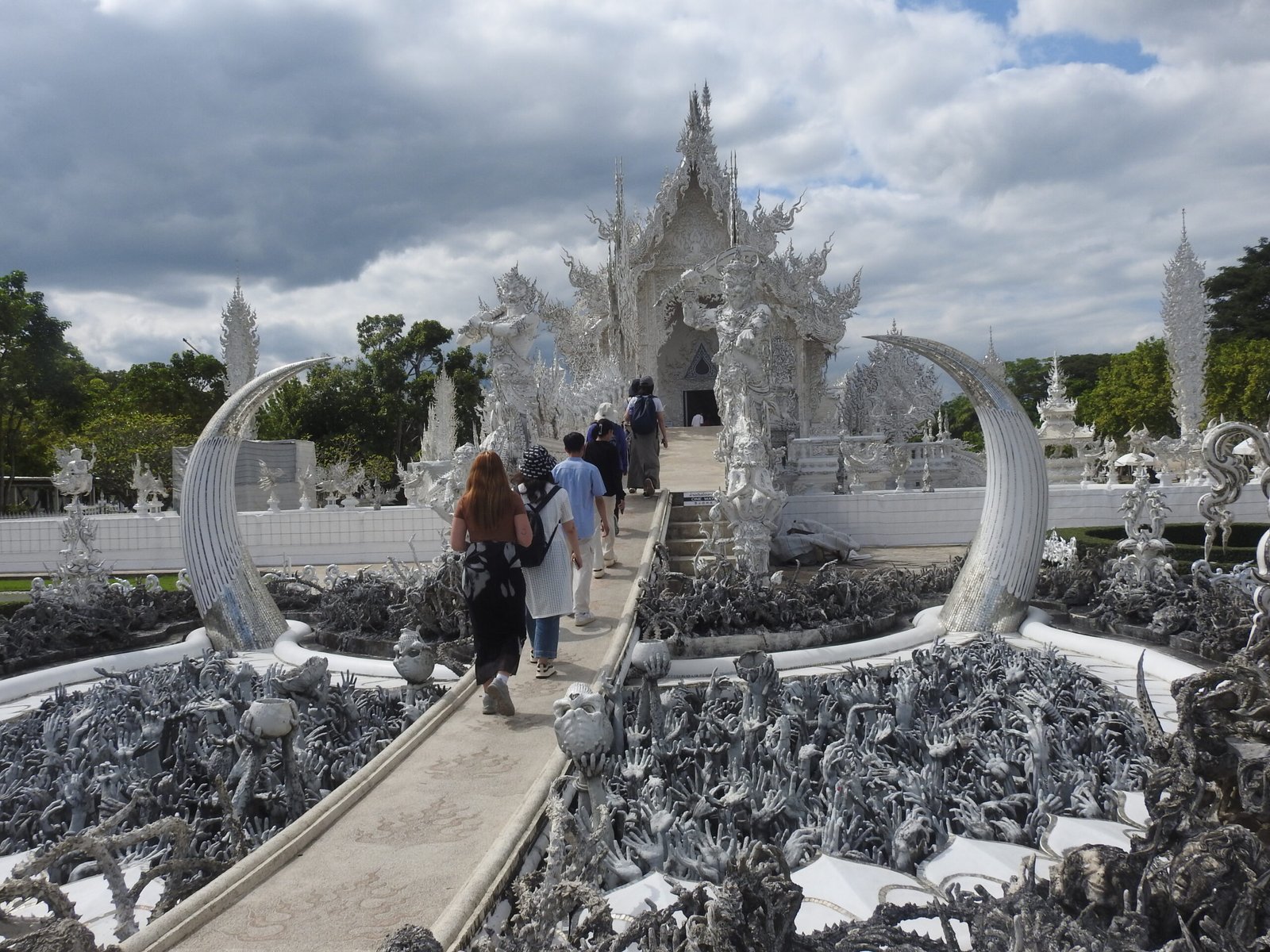
Your journey begins by crossing a narrow bridge over a haunting “sea of suffering.” Below, hundreds of sculpted hands reach up from a pit—some holding skulls, others grasping in desperation. This represents the human realm of desire, suffering, and the cycle of endless rebirth. Crossing the bridge is your symbolic path from this darkness toward enlightenment. There’s no turning back!
2. The Celestial Guardians
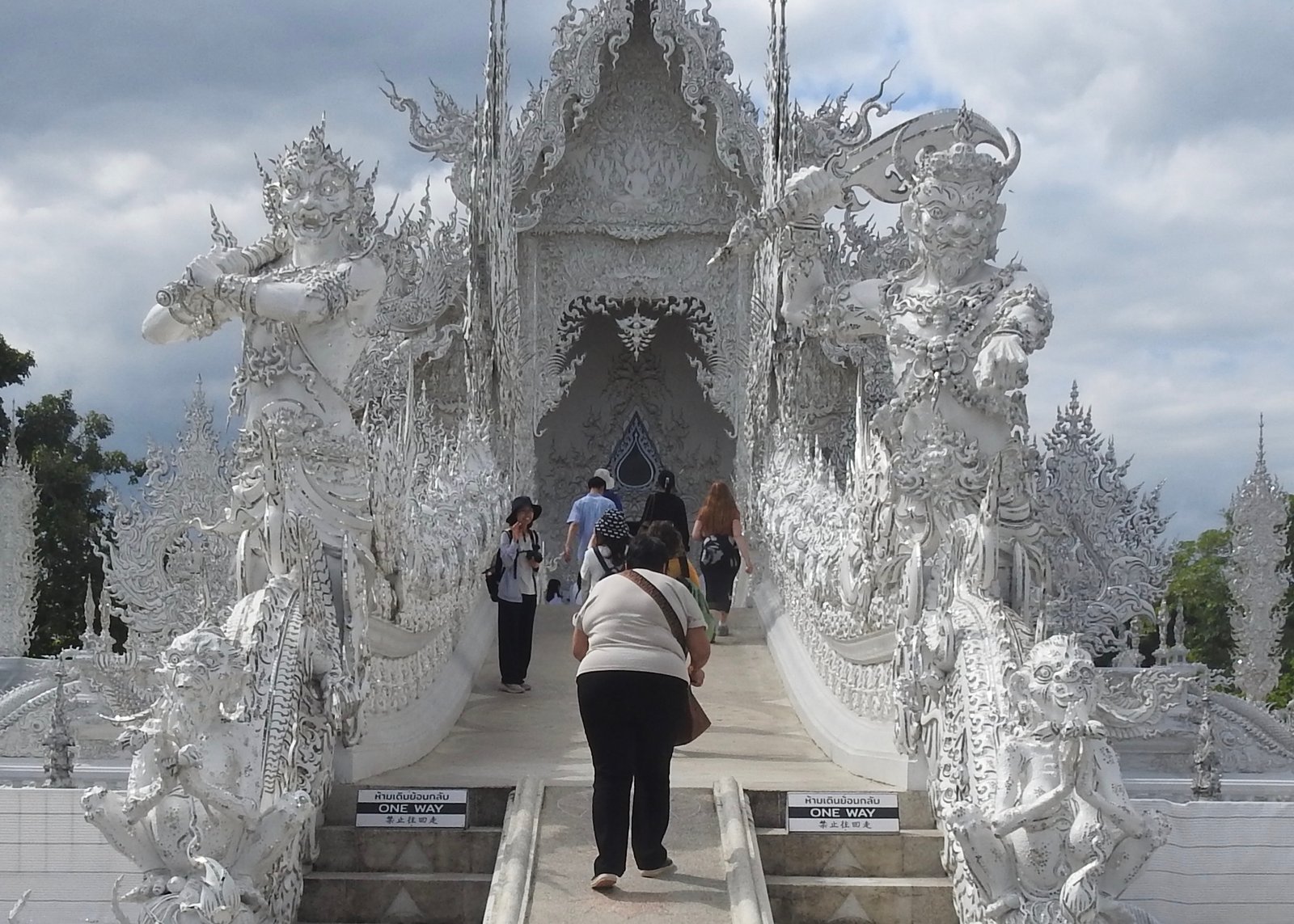
Before the bridge, two fierce, otherworldly statues stand guard. These are Kinnara, mythical half-human, half-bird beings. They are the divine protectors, ensuring the sacred temple remains a place for those with pure intent.
3. The Ubosot: The Purity of Wisdom
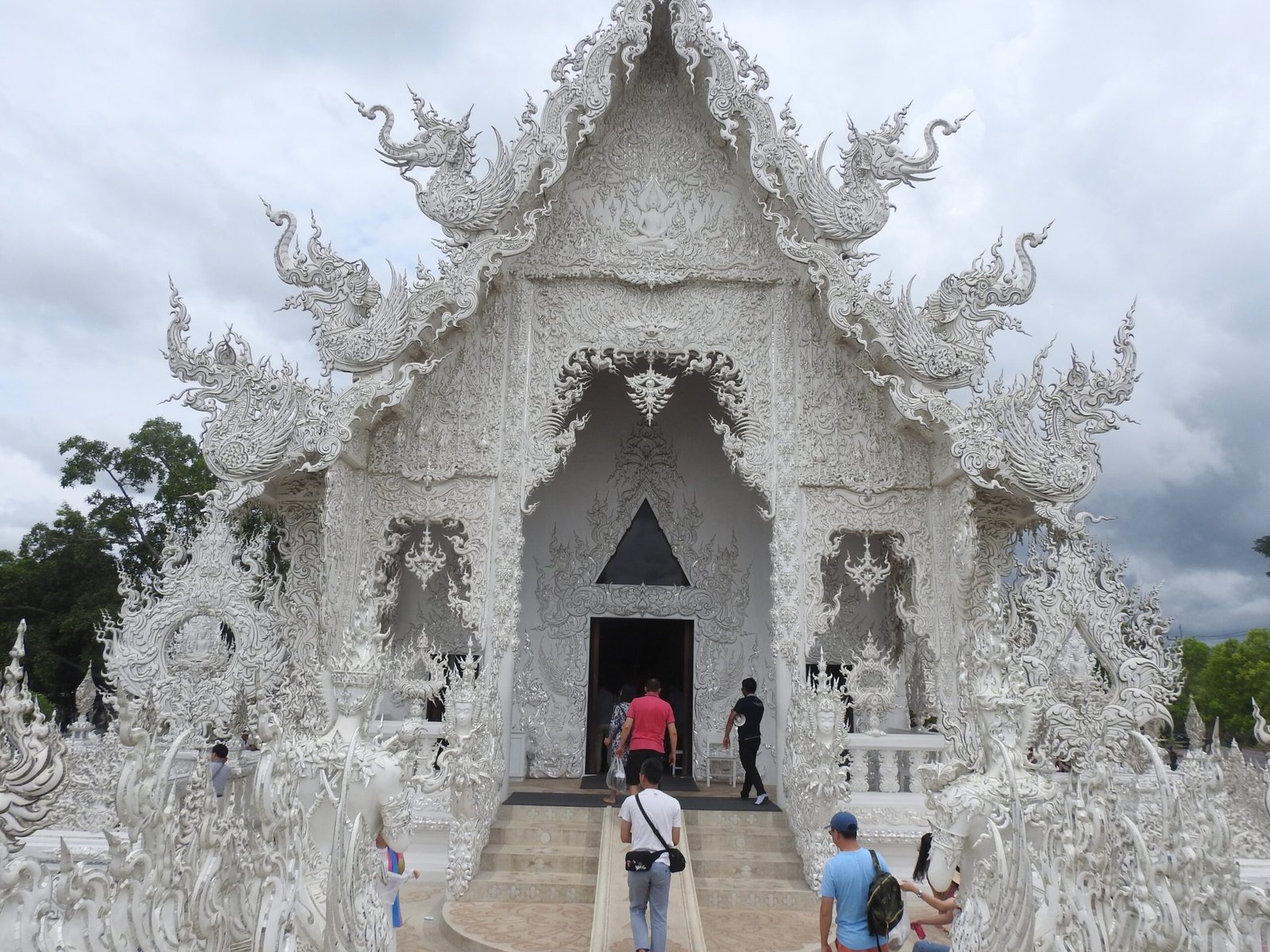
At the end of the bridge stands the main hall (ubosot), a breathtaking vision in white. The color symbolizes the absolute purity of the Buddha. But the magic is in the details: the entire structure is embedded with countless tiny mirror fragments. When the sun hits, the temple doesn’t just glow—it sparkles, representing the dazzling wisdom of the Buddha radiating across the Earth and Universe.
4. The Mind-Bending Murals Inside
Step through the door, and prepare for the biggest surprise in the White Temple’s story. Inside, traditional Buddhist murals are replaced with a whirlwind of pop culture. You’ll find Neo from The Matrix, Spider-Man, and even Hello Kitty! This isn’t random. The artist is making a powerful point: the temptations and evils that distract us from enlightenment are the very icons of our modern world—movies, consumerism, and technology. The Buddha sits serenely amidst this chaos, a call to find peace within it.
5. The Golden Mystery: A Witty Commentary
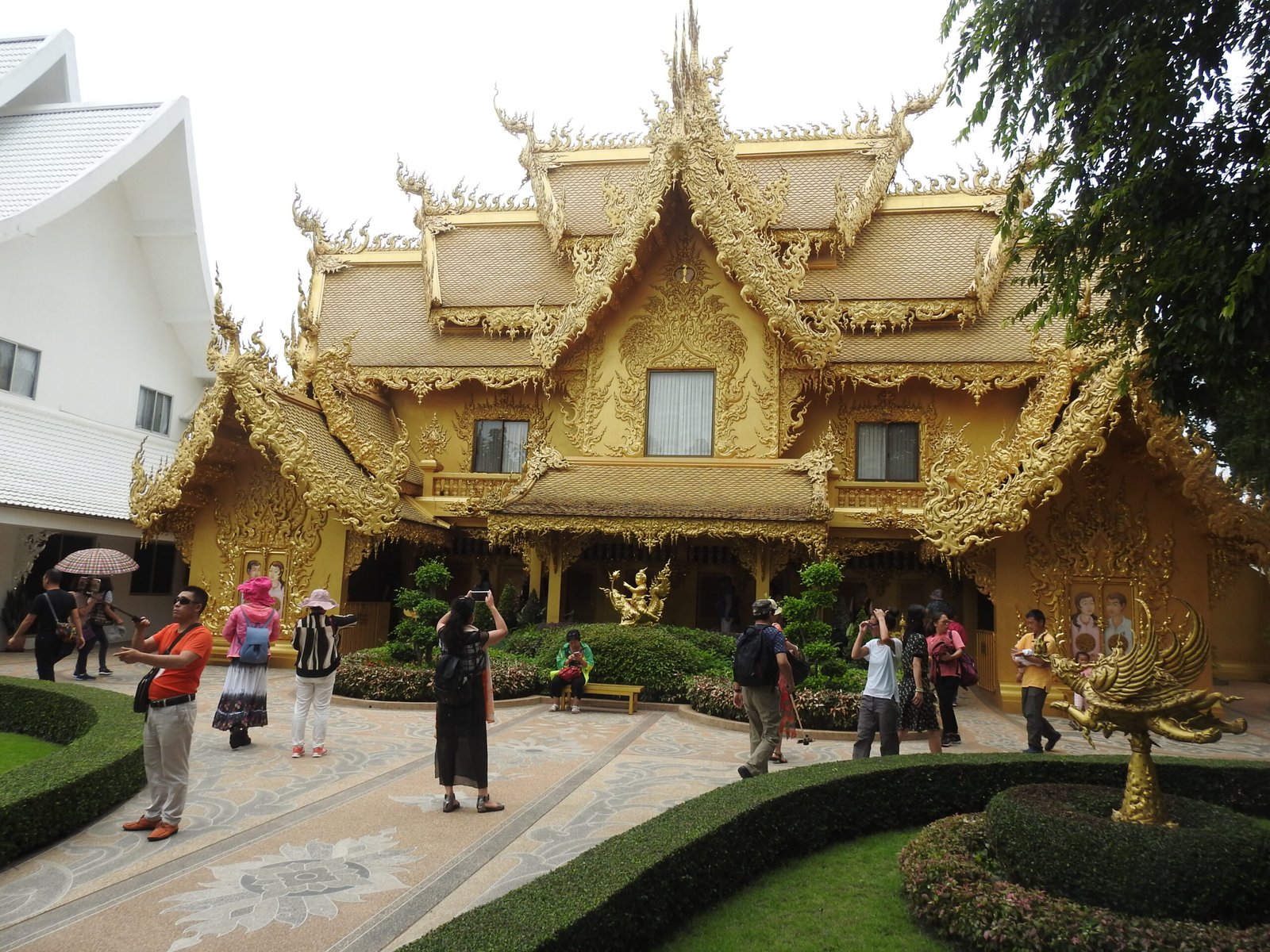
Amidst all the brilliant white, one building shines in opulent gold. What is this sacred, gilded structure? It’s the restroom. This is Chalermchai’s brilliant joke and social commentary. The gold represents the human obsession with worldly desires and material wealth—things he sees as ultimately temporary and less important than spiritual purity.
Secrets and Surprises: The Story Continues
The main temple is just the beginning. The story of Wat Rong Khun is still being written, and to truly appreciate it, look for these details:
The Nine-Tailed Fox: Tucked away in the gardens is a sleek sculpture of a nine-tailed fox from East Asian mythology. This creature symbolizes a different kind of temptation—one that is beautiful and clever, not just monstrous.
A Living Story: The temple is never finished. New sculptures and buildings are constantly added. This makes every visit unique and reinforces the idea that the pursuit of enlightenment is an ongoing journey, much like the temple’s own construction.
The Artist’s Gallery: The on-site gallery showcases Chalermchai’s other works and is a testament to the dedication funding this massive project.
Your Essential TravelGoSavvy Guide
➡️ Check Hotels & Flights for Your Trip to Chiang Mai or Chiang Rai
Best Time to Visit: Arrive right at opening (8:00 AM) to experience the temple in the soft morning light and, more importantly, before the tour buses from Chiang Mai arrive around 10:00 AM.
How to Get There:
Getting to Wat Rong Khun (The White Temple) from Chiang Mai
You have two main travel options for a seamless journey directly from Chiang Mai to the temple.
Option 1: Direct Private Taxi
For the utmost convenience, you can hire a private taxi for the entire journey from Chiang Mai. A major advantage is the flexibility to create a custom tour. Your driver can easily take you to visit other famous sights in Chiang Rai, such as the stunning Blue Temple (Wat Rong Suea Ten / วัดร่องเสือเต้น), the majestic Wat Huay Pla Kang (วัดห้วยปลากั้ง), and the thought-provoking Baan Dam Museum (Black House / พิพิธภัณฑ์บ้านดำ).Total Duration: Approximately 3-4 hours of driving from Chiang Mai.
Price: 3,000 – 4,500 THB (approximately $80 – $120 USD) for a round-trip. This price can often be negotiated to include waiting time and a multi-stop itinerary. We recommend agreeing on the final price and route in advance.
Passenger Capacity: One taxi can comfortably accommodate up to 4 people.
Option 2: Bus + Local Taxi
A more budget-friendly choice is to take a bus to Chiang Rai and then a local taxi.Bus from Chiang Mai to Chiang Rai:
Duration: 3-4 hours.
Price: 150 – 400 THB (approximately $4 – $11 USD).
Local
Local Transport from Chiang Rai Bus Station:
Local Taxi: A private taxi for the short leg to the White Temple will cost a separate fee. You can also hire one for the day to visit multiple sites.
Songthaew (Shared Red Pickup Taxi): For a local experience, you can take a shared Songthaew (a red pickup truck with two rows of seats in the back). You will need to negotiate the fare for a charter ride to the temple, as it is outside the standard city routes. This can be a cost-effective option if you are traveling in a small group.
What to Wear & Know:
Dress Code: This is an active temple. You must cover your shoulders and knees. Sarongs are available for rent at the entrance if you need them.
Admission Fee:
Please note that there is an admission fee to enter the White Temple grounds.Foreigners: 100 THB (approximately 3 USD).
Thai Nationals: Free.
Your contribution goes directly towards the ongoing maintenance and continuous artistic construction of this unique site, helping to preserve it for future generations.
Respect: Speak quietly, don’t climb on the sculptures, and remove your shoes before entering the main hall.
More Than a Temple: A Story You Help Write
The stunning story of Wat Rong Khun is not just about its past; it’s about its present and future. It is a profound, multi-sensory experience designed to provoke thought. It’s a story of one man’s passion, a critique of modern life, and a stunningly beautiful work of art all at once.

It challenges you to look beyond the surface and reflect on your own path. So go, cross the bridge, and become a part of the ongoing, stunning story of Thailand’s White Temple.
Final thoughts
If you ever find yourself planning a trip to northern Thailand, make sure Wat Rong Khun is on your list. Its white brilliance will stop you in your tracks. But its deeper message will stay with you long after your visit.
And when you imagine its future—still under construction, still evolving, with plans stretching toward 2070—the temple becomes a metaphor for us all: always becoming, always building, always seeking light.
So there you have it: the stunning story behind Thailand’s White Temple in Chiang Rai. May it inspire you, surprise you, and perhaps invite you to step over that symbolic bridge—left behind the out-reaching hands of desire, moving into a space of reflection, wonder and possibility.